


Welcome to mindsoul.space –the therapeutic practice of Katharina Gleißberg

I am Katharina Gleißberg, a psychological counselor and licensed practitioner of psychotherapy, as well as a certified specialist in equine-assisted interventions, certified by the International Society for Animal Assisted Therapy (ISAAT) and the Berufsverband Pferdegestützte Intervention (PI).
Get in touchA Safe Space to Be Seen
Sometimes, our inner struggles show up as emotional or physical challenges. Therapy can create a space where the underlying, often unconscious causes can be noticed, understood, and gently explored. Many people discover new ways to relate to themselves and navigate life with greater ease.
Move at Your Own Pace
Together, we look at the experiences or symptoms that feel burdensome and explore the themes behind them. Growth happens at your own pace, with plenty of room for your personal concerns and reflections.
Talk Therapy or Equine-Assisted Therapy
Therapy can take place through calm, focused conversations or through equine-assisted sessions with horses. Both approaches offer opportunities for insight, reflection, and personal development, supporting your journey toward balance and well-being.

Integral Talk Therapy
Equine-Assisted Therapy
Combining Both Approaches
Even within talk therapy, individual equine-assisted sessions can take place. Working with the therapy horse can support or accelerate the therapeutic process, helping you become more aware of your own behaviors, emotions, and relationship patterns.
Supporting Medical Treatments
Both talk therapy and equine-assisted therapy can be used as supportive approaches for people who are already receiving medical treatment. Equine-assisted therapy can also complement ongoing psychotherapeutic care.
I feel a particularly strong connection with English-speaking people.
Twenty years ago, I emigrated to the United States, and a few years ago I returned to Germany for family reasons. The experience of living between cultures—of being a stranger and starting over—has greatly broadened my perspective and continues to shape my therapeutic approach. I particularly enjoy working with people who go through similar experiences in Germany.
Client S. from Eltville, Integral talk therapy
Therapy does not mean that my clients must have a mental illness. I am also happy to provide support during life crises or phases of personal growth.
A prerequisite for equine-assisted therapy is a positive attitude toward horses and other animals, as well as enjoyment of outdoor activities. No prior experience with horses is required.

Provides a safe space to better understand ourselves, recognize internal connections, and activate our natural self-healing abilities.

Helps us embrace unavoidable challenges and focus our energy on what gives life meaning, direction, and fulfillment.

Touches us on a deep, often wordless level. In this special atmosphere of calm, presence, and genuine connection, trust and emotional healing can emerge.

Delivers therapy in a familiar environment—on your own property, with your own horse serving as an authentic and sensitive partner in the process.

Reveals underlying dynamics in the relationship between human and horse, showing where growth and healing are possible—paving the way for greater understanding and harmony in life.

Helps us embrace unavoidable challenges and focus our energy on what gives life meaning, direction, and fulfillment.
Client S. from Mainz, equine-assisted therapy

Integral Talk Therapy
Integral talk therapy is a condensed, focused form of modern psychology and psychotherapy. It is based on client-centered therapy developed by Carl R. Rogers and is enriched with elements from communication psychology, psychoanalysis, trauma therapy, psychosynthesis, and systemic approaches.
The Person and Their Inner Resources
This approach assumes that people have inner resources that can help them navigate difficulties. Often, there is an inner knowing of what feels right for one’s life. Disturbances or illnesses can arise when a person’s inner self-image is out of alignment with their experiences or external life circumstances.
The Therapeutic Conversation
The core of this therapy is active listening, empathetic understanding, and nonjudgmental reflection. This creates a space where thoughts, feelings, and experiences can be consciously recognized. The goal is to support personal growth, self-understanding, and an authentic relationship with oneself.
Combination with Equine-Assisted Therapy
Even within talk therapy, individual equine-assisted sessions can be included. Interacting with the therapy horse can support or accelerate the therapeutic process, helping you become more aware of your own behaviors, emotions, and relationship patterns.
Equine-Assisted Therapie
Combining with ACT
Talk therapy can be effectively combined with Acceptance and Commitment Therapy (ACT), a modern form of behavioral therapy. ACT can also be used on its own. It focuses on accepting difficult experiences rather than struggling against them and directing attention toward personal values and meaningful areas of life.
Complementing Other Treatments
Both integral talk therapy and ACT are evidence-based therapeutic approaches. They can be used alongside medical or psychotherapeutic treatment for additional support.
Overview of Therapy Services
Support for Life’s Challenges
If you are experiencing worries, anxiety, or difficult life situations, a conversation can provide relief. Perhaps you are feeling stressed in everyday life, wondering whether psychotherapy might help, or sensing a desire for a new direction but unsure where to start.Guidance and
Support
Psychological counseling can help clarify your next steps, provide guidance, and support decision-making. It offers a space to discuss current challenges and explore possible paths together.
Flexible Appointments
You can schedule individual sessions for psychological counseling. These sessions are also suitable for bridging the waiting period before starting therapy covered by health insurance.
Connecting with the Horse
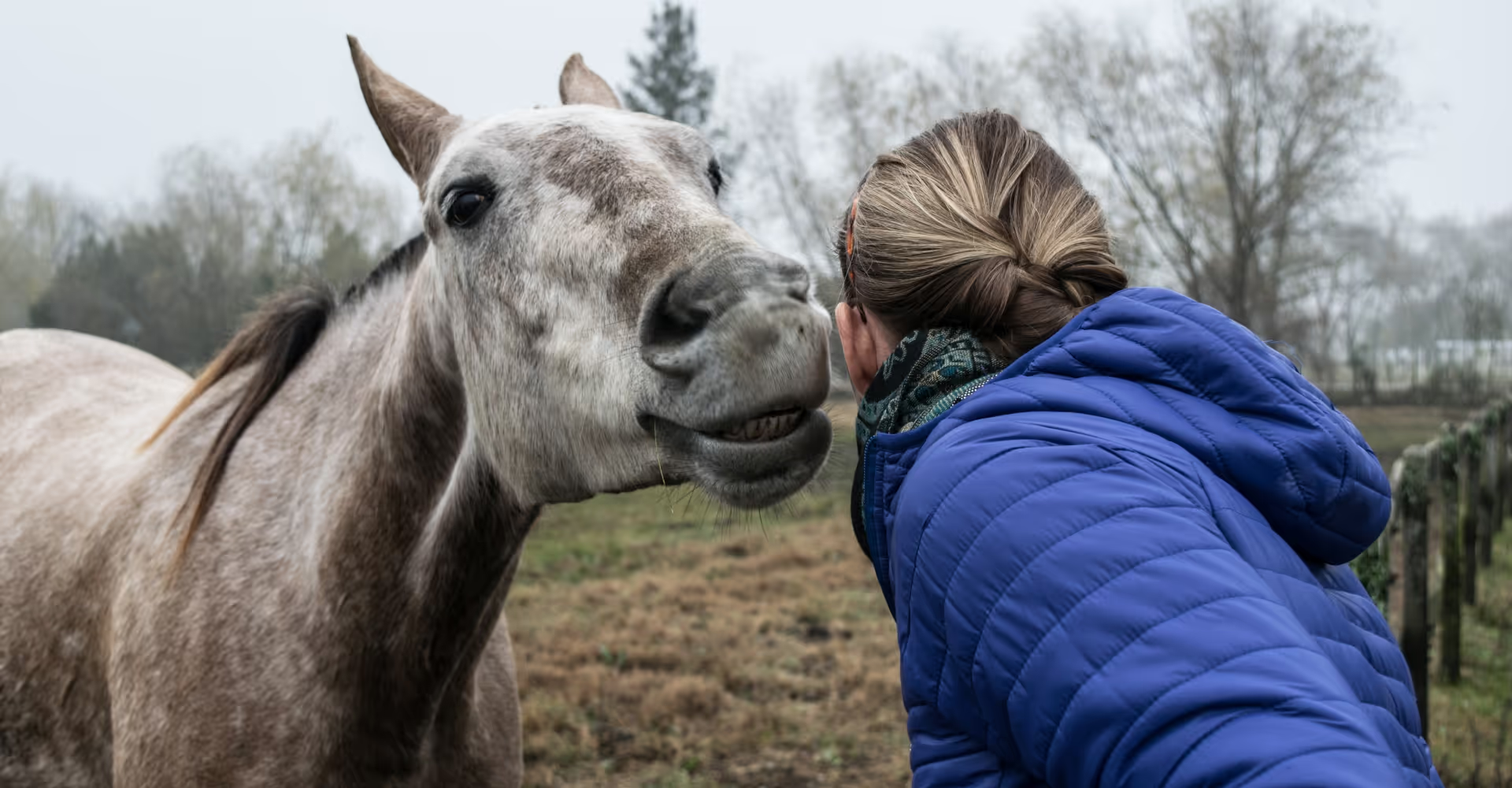
Horses can support the development of relationships—both with yourself and with the therapist. In equine-assisted therapy, interacting with a horse creates a space for new experiences in connection, communication, and self-awareness. The horse can have a calming effect and help support or accelerate the therapeutic process.
The Unique Awareness of Horses
As sensitive prey animals, horses are highly responsive to body language, tension, mood, and even unspoken intentions. Their behavior can help you become more aware of your own reactions, emotions, and boundaries. These experiences are then reflected on together in the therapeutic conversation.
No Previous Experience Needed
No prior experience with horses or riding is required. The focus is on getting to know the horse, interacting together, and mindful exercises on the ground. Much of the work happens through observation, body language, and mutual attention.
Even experienced riders or horse owners can benefit from equine-assisted therapy, including sessions with their own horse.
Overview of Therapy Services
At Your Own Pace
Clients get to know the therapy horse step by step. All exercises are carried out without pressure and can be paused or stopped at any time. Your individual pace and personal boundaries are always respected.
Complementing Other Treatments
Equine-assisted therapy can be used alongside psychotherapeutic or medical treatment and combines well with talk therapy.
Integral Talk Therapy
Areas of Expertise
In my therapeutic work—especially in equine-assisted therapy—I have gained extensive experience with adolescents and adults facing challenges such as depression, anxiety, or traumatic experiences. Another focus is supporting issues like communication, social behavior, setting personal boundaries, and accessing emotions.
Support in the Therapeutic Process
For some people, working with the horse makes it easier to connect with their own issues and let go of tension. This often creates a pathway into conversations about personal challenges, even when discussing them had previously been difficult.
Professional Background
With my training as a licensed practitioner in psychotherapy, I have solid knowledge of mental health conditions and diagnostic assessment. Based on this foundation, I can guide therapeutic processes appropriately, helping clients reflect on their experiences, understand patterns, and explore steps for personal growth.
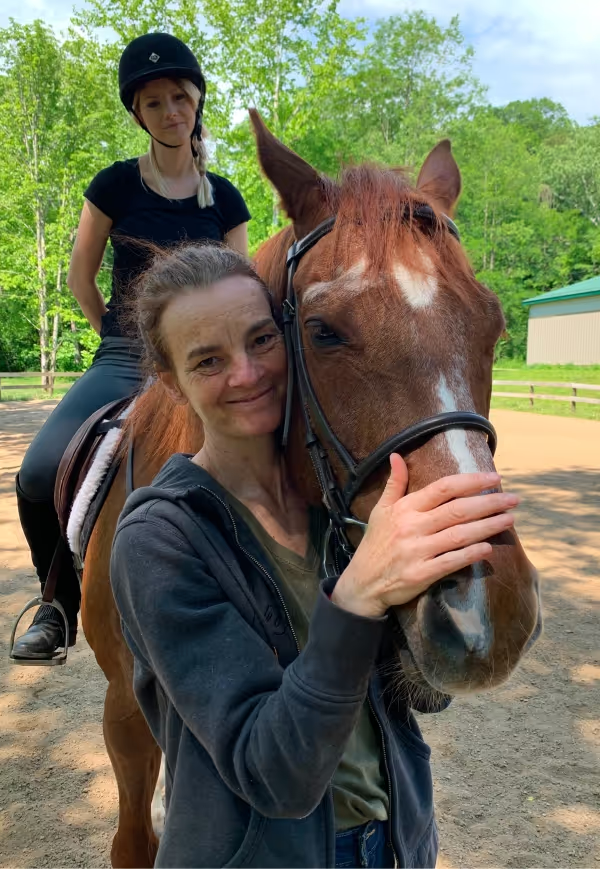
With my aging heart horse Art (Sweet Rolling Art).
Franziska Pfaunsch-Ohliger, trainer in equine-assisted intervention
Equine-assisted therapy is an effective treatment, or complementary therapy, for many psychological disorders. I am happy to collaborate with a treating physician or psychotherapist. Organic causes must be ruled out or medically treated before starting therapy.
Equine-assisted therapy can also be very helpful in dealing with challenges and life crises.
The course of therapy is always guided by the individual concerns and needs of each client. In many cases, therapy is structured as short-term support with around 12–15 sessions.
Many clients find regular sessions—such as weekly appointments—helpful. However, the frequency and duration can be adjusted flexibly. Toward the end of therapy, the intervals between sessions can gradually be extended.
Getting Acquainted and Orientation
(approx. 1–2 sessions)
First Therapeutic Steps
(approx. 2–3 sessions)
Deepening and Development
(approx. 6–8 sessions)
Completion of Therapy
(approx. 1–2 sessions)
My practice is a private practice, so all clients pay out of pocket.
Please check with your health insurance to see if reimbursement is possible or if supplemental insurance covers the costs.
Funding may also be available for equine-assisted therapy through associations, institutions, clinics, youth services, and similar organizations.
Session Duration
A therapy session lasts 50 minutes. Double sessions are also possible.
Therapy Session
(50 minutes)
€100.00
Psychological Counseling
(50 minutes)
€100.00
Surcharge for
Equine-Assisted Therapy
(50 minutes)
€45.00
Initial session
(100 minutes)
€150.00
The fee is due immediately after each session, payable via bank transfer.
Additional Time Charged as Therapy Time:
Preparation of therapy reports, conversations or written communication with insurers, authorities, doctors, psychotherapists, family members, caregivers, or legal representatives will be billed as therapy time.
Travel Costs
€0.75 per kilometer traveled.
According to Section 4 (14) of the German VAT Act (UStG), no value-added tax (VAT) is charged for therapeutic services.
For psychological counseling, no VAT is charged in accordance with Section 19 of the German VAT Act (UStG).
Cancellations must be made at least 24 hours in advance, either by phone or in writing. If not canceled in time, the full fee will be charged. Appointments not canceled within the required time will not be rescheduled.
Further terms and conditions apply.
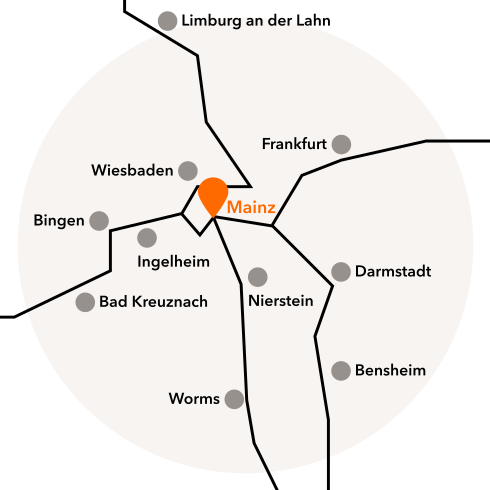
Practice Address
(Anova Shared Practice)
Heidelbergerfaßgasse 14
55116 Mainz
Equine-Assisted Therapy
takes place in Mainz-Hechtsheim.
Phone Number: 0151 56212267
You are also welcome to email me. Please use the contact form to do so.
Client V. from Mainz, couples therapy human & horse

